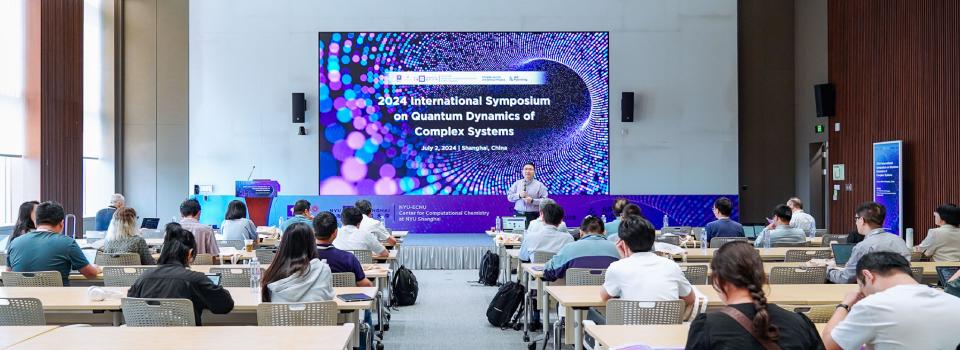


Every day, NYU Shanghai faculty, students, and scholars at research centers are making discoveries, adding insights, training scholars, and being recognized by their colleagues, their professional organizations, and the general public!
Here we look back on Academic Year 2023-2024 and celebrate research and discoveries by our colleagues!


















Click each book to explore more
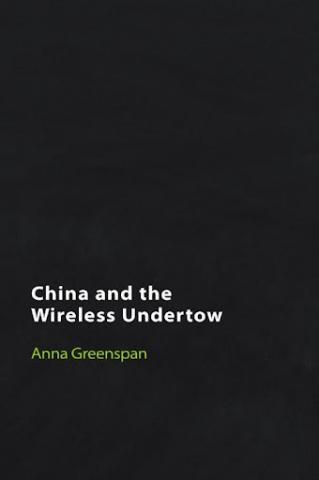
In her latest book, Professor Greenspan reimagines the relationship between China and ubiquitous wireless technology by synthesizing contemporary media theory with modern Chinese thought on three critical historical figures including Tan Sitong, Xiong Shili, and Mou Zongsan. The book takes a fresh look at the key issues around technological evolution in a shifting geopolitical landscape, offers an alternative to certain myopias of Western media theory, and presents a deep, historical engagement with issues and debates surrounding Chinese cyberculture.
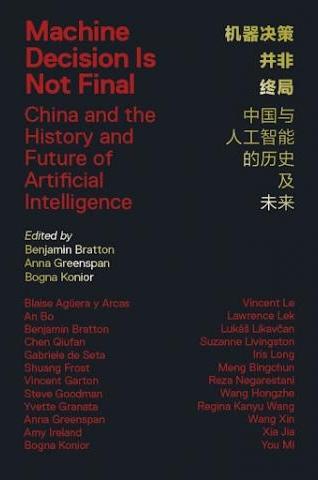
Co-edited by Associate Professor of Contemporary Global Media Anna Greenspan and Assistant Professor of Interactive Media Arts (IMA) Bogna Konior, who lead NYU Shanghai’s Center for Artificial Intelligence (AI) and Culture, along with former Visiting Professor Benjamin Bratton, this new volume tracks the history of Chinese AI and reexamines China’s engagement with AI by moving beyond the clichés that dominate contemporary debate. Contributing experts from across various fields draw on a mixture of speculative thought experiments and cutting-edge use cases to offer views on topics including AI and Chinese philosophy, AI ethics and policy-making, the development of computational models in early Chinese cybernetics, and the aesthetics of Sinofuturism. It provides a fresh perspective on what AI is today in China, and what it might become.
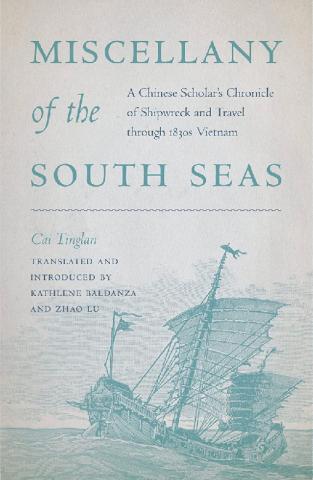
In this first English translation of Chinese scholar Cai Tinglan’s 1830s saga at sea (as known as Hainan Zazhu in Chinese), Cai documents his encounters with the daily life, culture, religious practices, and government affairs of the early Nguyễn dynasty of Vietnam. Assistant Professor of Global China Studies Zhao Lu and historian Kathlene Baldanza have made Cai’s adventures accessible to English-speakers for the first time, while providing a comprehensive introduction which explains the social, political, and economic context of his travels, along with extensive annotation and a glossary of terms.
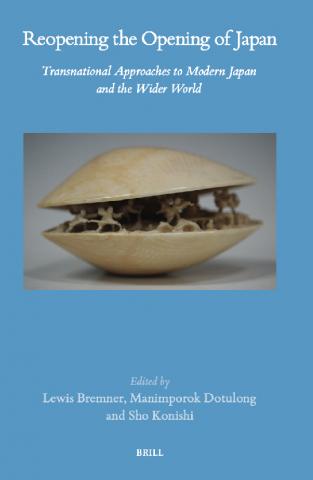
This new volume tackles current interpretative problems in the study of the opening of Japan to the Western world in the 19th century by looking beyond existing methods and theories to rethink the country and its global connections through new organizing frameworks. Postdoctoral Teaching Fellow for Global Perspectives on Society (GPS) Warren A. Stanislaus’ chapter, “Laughing at Civilisation: Charles Wirgman’s Japan Punch and the Reopening of Great Britain,” reveals the unlikely story of a popular treaty port humor magazine, which diverged from a civilizing mission to playfully reimagine the opening of Japan and satirize Western notions of progress.
The rapid development of quantum technologies has driven a revolution in related research areas such as quantum computation and communication, and quantum materials. The first prototypes of functional quantum devices are beginning to appear, frequently created using ensembles of atoms, which allow the observation of sensitive, quantum effects, and have important applications in quantum simulation and matter wave interferometry. This modern text offers a self-contained introduction to the fundamentals of quantum atom optics and atomic many-body matter wave systems. Assuming a familiarity with undergraduate quantum mechanics, this book will be accessible for graduate students and early career researchers moving into this important new field. A detailed description of the underlying theory of quantum atom optics is given, before development of the key, quantum, technological applications, such as atom interferometry, quantum simulation, quantum metrology, and quantum computing.
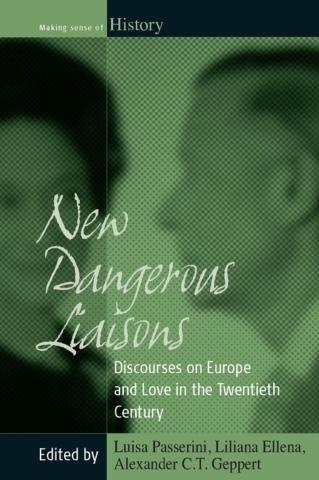
In Europe, love has been given a prominent place in European self-representations from the Enlightenment onwards. The category of love, stemming from private and personal spheres, was given a public function and used to distinguish European civilisation from others. Contributors to this volume trace historical links and analyse specific connections between the two discourses on love and Europe over the course of the twentieth century, exploring the distinctions made between the public and private, the political and personal. In doing so, this volume develops an innovative historiography that includes such resources as autobiographies, love letters, and cinematic representations, and takes issue with the exclusivity of Eurocentrism. Its contributors put forth hypotheses about the historical pre-eminence of emotions and consider this history as a basis for a non-Eurocentric understanding of new possible European identities.
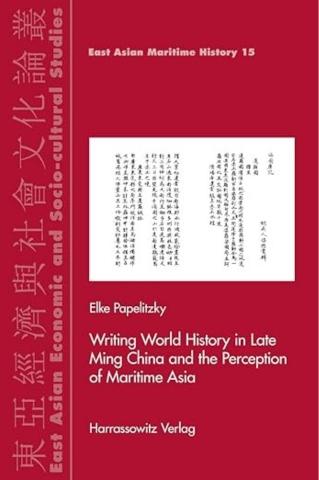
The last century of China’s Ming dynasty (1368–1644) saw many troubles and challenges from abroad. Pirates raided the coast, Europeans challenged the traditional world order of the tribute system, and the everlasting threat from the northern steppe people continued to raise concerns for the state’s survival. This climate of uncertainty resulted in many Ming literati discussing foreign countries. During the last decades of the Ming era, seven authors wrote monographs that can be considered a form of Chinese “world history.” The authors describe the geography, history, and political systems of foreign countries and regions, ranging from China’s close neighbors Japan and Mongolia to more distant lands such as Mogadishu and Europe. This book studies each of the seven authors’ knowledge and perceptions of the world and focuses especially on countries linked to China by a maritime border, namely Siam (Thailand), Malacca, and Portugal. The book combines a close textual and paratextual analysis with a biographical study to understand why the authors wrote the texts the way they did. This is the first comprehensive introduction to these texts to contribute to the understanding of late Ming historiography and late Ming scholars’ perceptions of foreign countries. “As part of my research for this book, I visited several libraries in North America and Asia to study the original Ming prints and manuscripts. One manuscript in particular was fun to examine, the Siyi guangji 四夷廣記 by Shen Maoshang 慎懋賞 now in the National Central Library, Taipei. At some point in its history, this book had been taken apart and its pages been rebound. During this process, parts of the text were lost,” Papelitzky says. “As I visited the library, I tried to figure out the original order of the chapters in the Siyi guangji, looking at water stains and tiny holes in the paper that gave clues about which pages had originally been together. This might seem like a monotonous task but I really enjoyed working not only with the written text but also the material object.”
This book is based on over a decade of conversations and encounters with one family - around one woman suffering from several chronic diseases in the United States. The book shows how chronic illness is folded into the world of the family, how illness reconfigures relationships of care, and how it directs the work of medicine in unexpected ways. “Chroniques de la maladie chronique” is an ethnographic portrait written on and through the body over time.
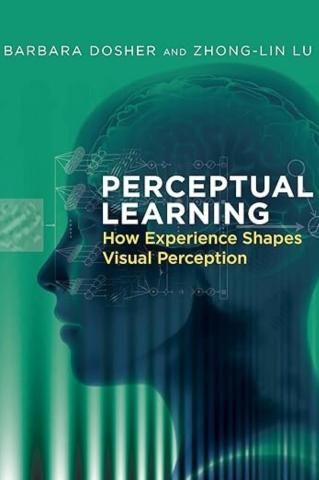
Perception refers to the process of people organizing, identifying, and interpreting sensory information to understand the presented information or environment, such as distinguishing between different odors or discriminating between different shades of colors. Practice or training in perceptual tasks improves the quality of perceptual performance, often by a substantial amount. This improvement is called “perceptual learning” and has become an active area of research of both theoretical and practical significance. Dosher and Lu’s book provides a comprehensive and integrated treatment of the phenomena and theories of perceptual learning, focusing on the visual domain, for active perceptual learning researchers, and to describe and develop the basic techniques and principles for readers who want to successfully incorporate perceptual learning into applied developments. “Barbara and I started doing research in perceptual learning in 1997. The field has transformed since then, and this book tells the story of what we came to know about both the phenomena and the theories,” Lu says. “The publication of this book is a major milestone in our more than 20 years of collaboration. It is also the beginning of many new, exciting joint research projects. I really appreciate Barbara’s friendship and the opportunity to work with her. ”
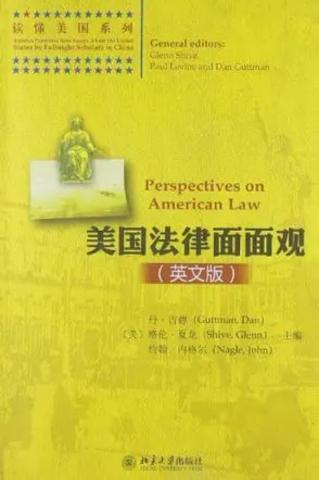
The authors of this books are law professors from renowned American universities or Fulbright Program attendees in China, and they understand the situation in China very well. The topics in this book include American law and lawyers, the court system of the United States and judges, and topics in public and private research in American law.
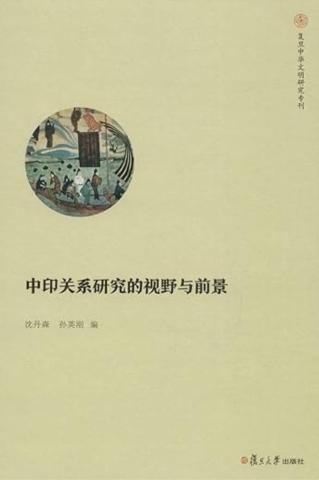
This book is a result of the Workshop on Conceptualizing and Reexamining India-China Connections at Fudan University’s International Center for the Studies of Chinese Civilization. In November 2013, over 20 scholars from China and abroad attended the workshop and reflected on previous research of China-India relations and discussed future prospects of topics including history, languages, literature, images, international relations spanning from ancient to modern times. Tansen Sen is the editor of the book and author of one of the chapters.
The goal of "Problemas da Educacao" is to design better economic policies regarding the national education system in Brazil. The policy proposals follow from a comprehensive analysis of the most recent scientific evidence regarding education and social outcomes. Throughout the book, many myths about the education system in Brazil, such as that it was better in the past, are put to rest. The policy proposals emerge from a coherent vision about the path that the education system should follow, with suggestions to enhance short, medium and long-term outcomes for the Brazilian society.
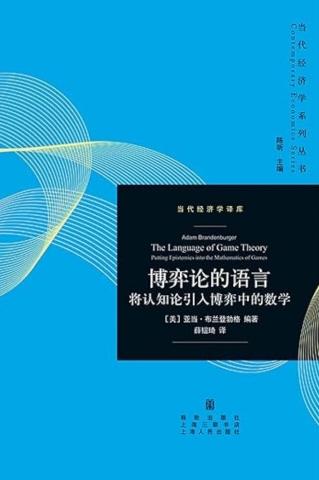
This volume published by the Truth & Wisdom press is the Chinese translation of the 2014 title, The Language of Game Theory: Putting Epistemics into the Mathematics of Games, by Adam Brandenburger, Director of the Program on Creativity and Innovation at NYU Shanghai. In eight papers written by Brandenburger and his colleagues over the course of 25 years, this work reconstructs game theory to focus on the centrality of how players reason about a game. This restructured program, now called epistemic game theory, extends the classical definition of a game model to include a description of how the players reason about one another (including their reasoning about other players' reasoning). With this richer mathematical framework, it is possible to determine how players’ reasoning influences the way in which a game is played. Epistemic game theory includes traditional equilibrium-based theory as a special case, but makes it possible to understand a broad range of non-equilibrium behavior. "Adam Brandenburger's work on the knowledge requirements implicit in game theory has become classic. These are of profound importance in understanding the relevance of game theory and, indeed, economic theory in general to the real economy. It is very good to have them collected, with an introduction that brings out the underlying themes." —Kenneth J. Arrow, Stanford University, USA, 1972 Nobel laureate in Economics
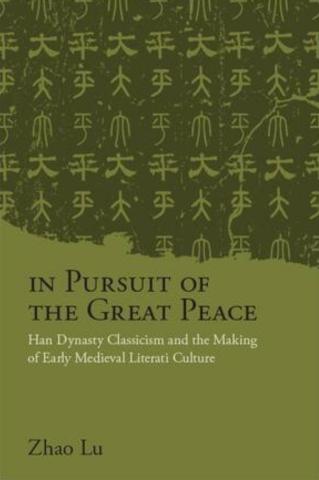
As part of the SUNY series in Chinese Philosophy and Culture, this book by Zhao Lu examines the Great Peace (taiping 太平), one of the first utopian visions in Chinese history, and its impact on literati lives during the Han Dynasty (206 BCE - 220 CE). In the book, Zhao Lu describes the transformation of literati culture that occurred in Han China -- during a period of time when the imperial court encouraged classicism as a way to counter the erosion of imperial authority. Zhao Lu uses sociological methods to reconstruct the daily lives of the literati, showing how they created their own thought by adopting, modifying, and countering the work of their contemporaries and predecessors. He also delves into the lives of the literati bureaucrats, and how they networked with each other during their travels to form a corpus of knowledge that comprised classicism in Han China. This evolution and expansion of knowledge ultimately gave way to literary writing and religious Daoism. “Zhao’s study presents a model of intellectual history. Smartly written, it excels in connecting the analysis of specific texts and concepts with broader trends in the social-political realm. His work helps demythologize Chinese thought and makes it legible to scholars around the world.” — Miranda Brown, University of Michigan
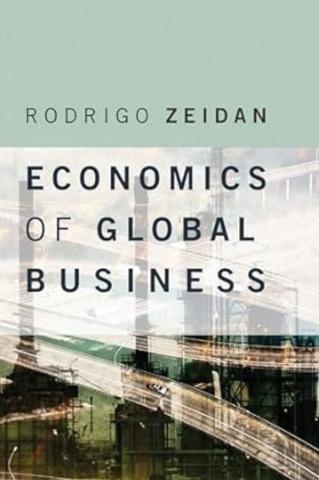
A textbook with innovative real-world macroeconomic analyses of timely policy issues, with case studies and examples from more than fifty countries. This timely and refreshingly real–world focused textbook examines some of the world's most critical policy issues through a macroeconomics lens. After presenting analytical foundations, modeling tools, and theoretical perspectives, Economics of Global Business goes a step further than most other texts, with a practical look at the local and multinational tradeoffs facing economic policymakers in more than fifty countries. Topics range from income equality and the financial crisis to GDP, inflation and unemployment, and, notably, one of the first macroeconomic examinations of climate change. Written by a globetrotting economist who teaches and consults on three continents, Economics of Global Business aims not for definitive answers but rather to provide a better understanding of the context-dependent rationales, constraints, and consequences of economic policy decisions. The book covers long-run and short-run growth (with examples from the United States, China, the European Union, South Korea, Japan, Latin America, Africa, Australia, and Vietnam); financial crises and central banks; monetary and fiscal policies; government budgets; currency regimes; climate change and macroeconomics; income inequality; and globalization. All chapters rely on recent and historical examples of economic policy in action. The book is particularly suitable for use as an introduction to macroeconomics for business students. "Economics of Global Business focuses on the pragmatic aspects of policy making. This is a bold and novel approach to economics, a refreshing take on what can be an arid subject. Readers will encounter many examples from all over the world, and the book incorporates all the main issues of our time, such as climate change, the great financial crisis, and income inequality."— Otaviano Canuto, Executive Director, World Bank Group