


Abstract:
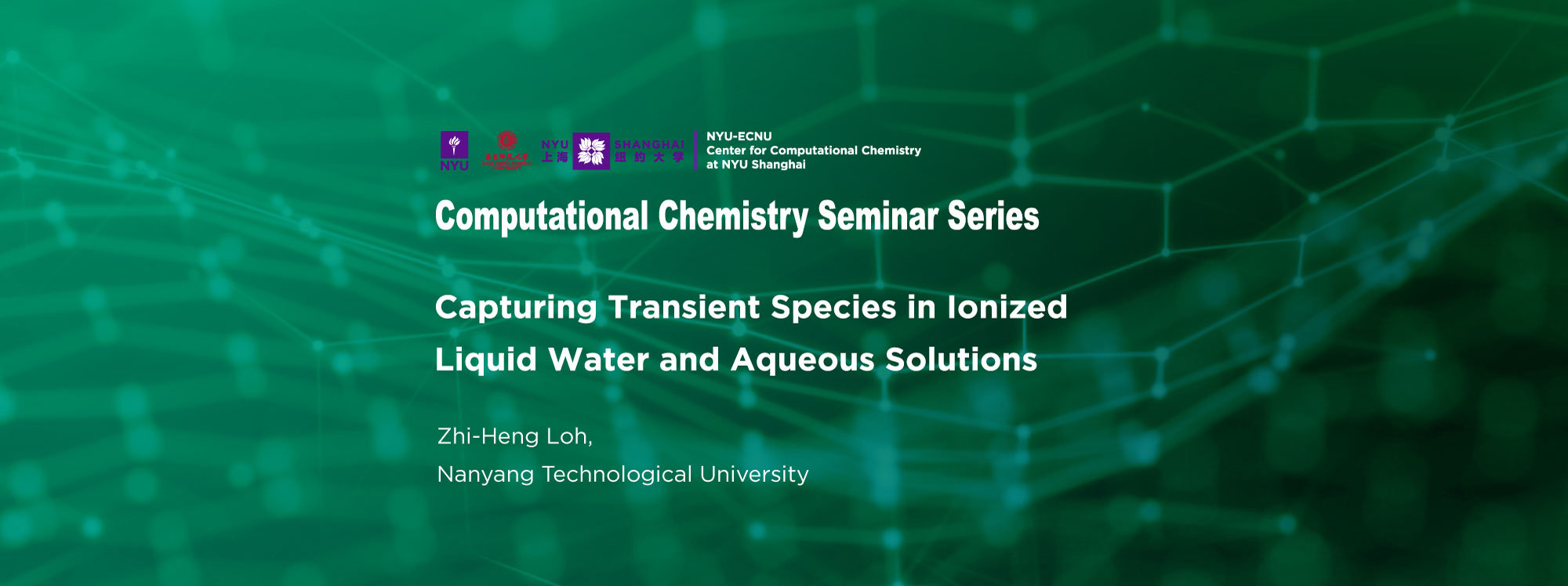
The ionization of liquid water serves as the principal trigger for a myriad of phenomena that are relevant to radiation chemistry and radiation biology. The earliest events that follow the ionization of water, however, remain relatively unknown. Of particular interest are the lifetime of the transient water radical cation (H2O·+) and the fate of the electron that is injected into the conduction band of water by ionization. Femtosecond soft X-ray free-electron laser probing at the oxygen K edge is employed to track the primary proton transfer reaction of ionized liquid water. The experimental results suggest that H2O·+ undergoes proton transfer to yield vibrationally excited OH· on the timescale of 46 ± 10 fs. Subsequent vibrational relaxation of OH· occurs with a time constant of 0.18 ± 0.02 ps. By employing few-cycle pulses in the visible to near-infrared (500 – 900 nm) and the short-wave infrared (0.9 – 1.7 μm), we have performed a comprehensive probe of the fate of the electron that is initially injected into the conduction band by ionization. The results suggest that the relaxation of the conduction band electron to the hydrated s electron proceeds via an intermediate state, whose lifetime is found to be 62 ± 10 fs (110 ± 5 fs) in H2O (D2O), identified as the p electron. Extension of these studies to biomolecules in aqueous solution reveal vibrational wave packet dynamics induced by photoionization or photodetachment. Analysis of the wave packet dynamics reveals the normal modes that drive structural reorganization upon electron ejection and lifetimes of transient radical cations. Our results shed light on the elementary ultrafast dynamics that accompany the interaction of ionizing radiation with molecules of biological relevance.
Biography:
Zhi-Heng Loh received his S.B. from M.I.T. and Ph.D. from University of California, Berkeley. After postdoctoral research at UC Berkeley and the Max Planck Institute of Quantum Optics, he returned to Singapore in 2010 to start his independent career at Nanyang Technological University, Singapore. His primary research interest lies in the study of ultrafast ionization-induced phenomena in gases, liquid water, and aqueous solutions, probed using femtosecond X-ray to infrared spectroscopies. His awards include the Asian and Oceanian Photochemistry Association Prize for Young Scientists, the Chemical Society of Japan Distinguished Lectureship Award in Physical Chemistry, and the Chinese Academy of Sciences President's International Fellowship.
Seminar Series by the NYU-ECNU Center for Computational Chemistry at NYU Shanghai
This event is open to the NYU Shanghai, NYU, ECNU community and the computational chemistry community.