



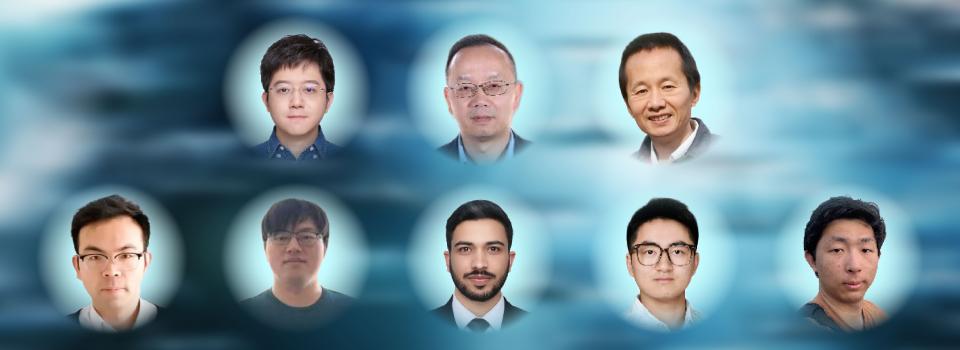
In the First DREAM Target 2035 Drug Discovery Challenge, jointly organized by the University of Toronto, Pfizer, and IBM, an interdisciplinary team led by Professors Sun Zhaoxi, John Zhang, and Liu Zhirong from Shenzhen University of Advanced Technology, NYU Shanghai, and Peking University achieved outstanding results, ranking first globally in both of the first two completed rounds. Advised by Professor Zhang, the NYU Shanghai members of the team included Chemistry PhD student Zheng Lei and undergraduate students Dai Yizhe and Zhou Qisheng.
DREAM Target 2035 is an open-science global initiative bringing together scientists and researchers committed to developing novel chemical and biological tools to advance our understanding of the human proteome and provide critical scientific foundations for innovative drug discovery.
This competition focused on the protein target WDR91—a WD-repeat domain-containing protein involved in intracellular vesicle transport. WDR91 acts as a regulatory factor of the phosphatidylinositol kinase PI3K and plays a central role in phosphatidylinositol 3-phosphate (PI3P) metabolism, which in turn affects endosome maturation, membrane trafficking, and cell signaling. Given its key involvement in these processes, WDR91 is widely considered a highly promising drug target.
The challenge attracted more than 200 teams and individual participants worldwide, including top academic institutions such as Duke University, the University of Florida, the University of Toronto, the University of Sydney, the Technical University of Munich, and Helmholtz Munich, as well as leading AI-powered drug discovery companies and software firms such as Insilico Medicine, DiaGen AI, and OpenEye Scientific.
Amid fierce competition, the joint team’s multimodal AI-driven drug screening approach stood out. In the first round, their hit rate was three times higher than that of the second-place team. In the second round, they maintained a strong lead, with a hit rate nearly double that of the next competitor.


Based on their exceptional performance in the first two rounds, the team has been invited to participate in the third phase of the challenge, which will focus on integrating experimental and computational drug screening.
Notably, the team also achieved a top-three finish in another prestigious international competition—the ASAP Polaris Binding Affinity Prediction Challenge—and was invited to present their work on the organizers’ official YouTube channel.