


Abstract:
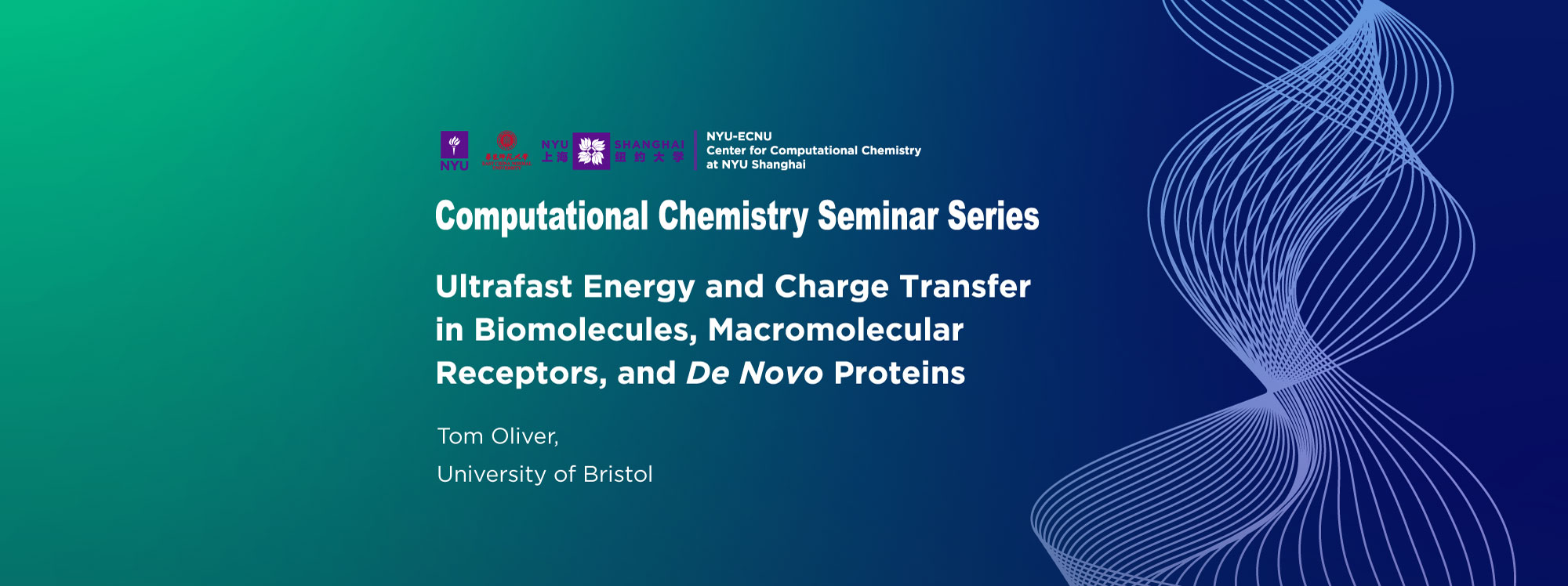
Ultraviolet light absorption by aromatic amino acids in proteins can cause harmful photoionisation reactions, ejecting an electron into the surrounding environment. Remarkably, for indole and phenol—the chromophores of key amino acids- this reaction occurs on surprisingly slow nanosecond timescales in the near-UV, directly shaping the fluorescence lifetime and triplet quantum yield in aqueous environments.
Macromolecular synthetic lectins used for glucose sensing display enhanced fluorescence upon sugar binding. Our ultrafast measurements reveal that intra-molecular transfer governs their fluorescence behaviour, and glucose binding suppresses this non-radiative decay route, boosting the intrinsic emission efficiency.
Using ultrafast two-dimensional electronic spectroscopy with sub-8 fs time resolution, we have captured the earliest time events in a de novo heme-binding protein (4D2). Our experiments reveal that ultrafast Histidine-Iron bond cleavage is the primary non-radiative decay pathway, providing clarity on relaxation in similarly structured natural cytochrome proteins.
Biography:
Tom Oliver is an Associate Professor of Physical Chemistry at the University of Bristol in the School of Chemistry. He received his PhD from Bristol in 2011. Between 2011-2025, he was a post-doctoral research fellow at UC Berkeley where he pioneered the two-dimensional electronic-vibrational spectroscopy technique. In 2015, he was awarded a Royal Society University Research Fellowship: a prestigious 8-year independent fellowship enabling him to start his independent career. He was appointed as a lecturer (tenured position) in 2018, and promoted to Associate Professor in 2019. He was a member of the Boostcrop team who won the 2025 RSC Faraday Horizon Prize for developing an inert "molecular heater" spray that increases crop yields under sunlight.
Seminar Series by the NYU-ECNU Center for Computational Chemistry at NYU Shanghai
This event is open to the NYU Shanghai, NYU, ECNU community and the computational chemistry community.